ADHD Impulse Spending: Why Your Brain Loves Black Friday (and How to Keep Your Money)

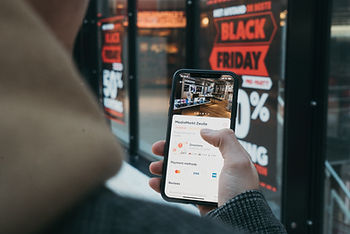
It's 11.48pm on a Thursday. You only opened the app to check your parcel.
Now there's a countdown timer. "Only 2 left!" A jumper you didn't know existed 40 seconds ago is suddenly essential. Your thumb is already hovering over Buy now.
The little rush when you tap it? Gorgeous.
The feeling three days later when four parcels arrive and your banking app is giving you side-eye? Less gorgeous.
Black Friday is coming soon, Friday, 27 November. For ADHD brains, it isn't just a sale. It's a dopamine theme park designed by people who know exactly which buttons to press.
And before we go any further: ADHD impulse spending is not about you being bad with money. It's about your brain doing exactly what it's built to do in an environment built to exploit it.
Why our brains find Black Friday so hard
Dopamine wants it now
ADHD brains tend to run low on easy, steady dopamine. So we're drawn to things that give a quick hit: novelty, urgency, reward. Online shopping delivers all three in one tap.
Waiting feels physically uncomfortable
A study of adults with ADHD in Iceland found that the link between ADHD symptoms and impulsive buying was explained by difficulty deferring gratification: putting off a reward now for a better outcome later. That isn't a character flaw. It's an executive function skill that ADHD makes harder.
Countdown timers hijack time blindness
Many of us struggle to feel time. A ticking clock and "ends at midnight!" creates artificial urgency, and urgency is the thing that switches our brains on. Retailers know this.
We shop to regulate
At the end of a long, dark November day, scrolling a sale feels soothing. That's comfort spending: using a purchase to shift a feeling. The Money and Mental Health Policy Institute identified it as one of the main ways our mental health shapes our spending.
The "ADHD tax" is real
Research from Monzo, reported by the University of Cambridge, found adults with ADHD face an average extra £1,600 a year in costs linked to impulsive spending, missed bills and difficulty sticking to a budget.
In the YouGov survey behind it, 80% of women and 71% of men said ADHD-related money problems added to their anxiety.
Read that back. £1,600 a year. That's not you being frivolous. That's the price of a world with very little friction and a brain that needs more of it.
Pause. Sip of water. Shoulders down. Now let's build some friction.
7 shame-free ways to protect your money this Black Friday
1. The 24-hour basket rule
Add it to your basket. Close the app. Wait 24 hours. If you still want it tomorrow, and it's still affordable, buy it. Money and Mental Health has campaigned for exactly this kind of cooling-off window, because it works.
2. Delete saved cards
Make yourself get up and find your purse. Those 30 seconds are often all your brain needs to ask "do I actually want this?"
3. Turn off shopping notifications
Every "Your basket misses you!" ping is designed to pull you back. Turn them off for all shopping apps this week. Unsubscribe from sale emails for a fortnight.
4. Set a "fun money" pot
Total restriction usually ends in a 2am binge. Instead, move a set amount into a separate pot. Spend that guilt-free. When it's gone, it's gone.
5. Use your bank's tools
Many UK banking apps let you set spending alerts, limits or blocks. Turn on instant notifications so every spend is visible.
6. Write a "why" list before you browse
If you genuinely need things (Christmas presents, a winter coat), write the list first. Shop the list. Close the tab.
7. Find another dopamine hit
If you're shopping to feel better, try a swap: a walk, a bath, a voice note to a friend, a body doubling session to clear your inbox. Different hit, no parcel.
FAQs
Why do people with ADHD impulse buy?
ADHD brains seek quick dopamine and find it harder to delay gratification. Sales, countdown timers and one-tap checkouts make impulsive buying much more likely.
What is the ADHD tax?
The extra costs of living with ADHD, like impulse buys, late fees and forgotten subscriptions. Monzo research found adults with ADHD pay an average extra £1,600 a year.
How can I stop impulse spending with ADHD?
Add friction: wait 24 hours before buying, delete saved cards, turn off shopping notifications, use bank spending alerts, and keep a separate "fun money" pot.
Is impulse spending a symptom of ADHD?
Impulsivity is a core part of ADHD, and research links ADHD symptoms with impulsive buying. ADHD impulse spending is a brain-based pattern, not a lack of willpower.
Your money, your brain, your rules
You don't need more discipline. You need systems that work with your brain, and someone in your corner when things wobble.
That's exactly what my 1:1 ADHD coaching is for. Together we'll look at your real spending patterns, spot where the ADHD tax is quietly draining your money, and build simple, shame-free systems that actually fit your brain. Book your audit call and let's start with where you are right now.
Charlotte x


Comments